The History of "No U": How Uno Reverse Became a Meme
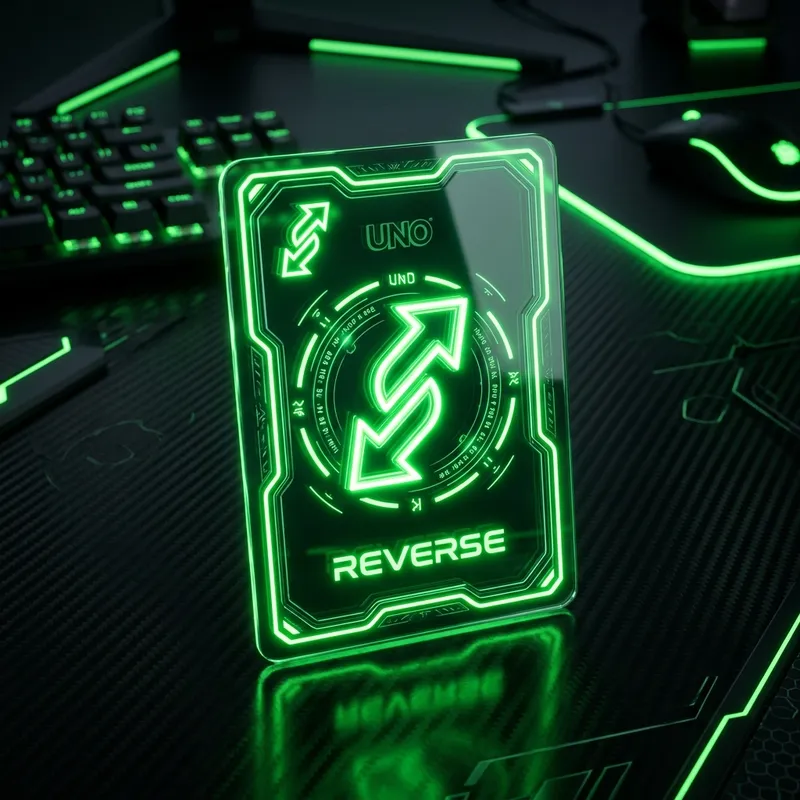
Before 2018, the Uno Reverse card was just a piece of cardboard used to ruin your older sibling's turn in a family card game. Today, it is the most recognizable symbol of internet retaliation. Here is the true history of the meme.
Origins: The "No U" Era (2017)
Long before image macros dominated Twitter replies, there was the text-based comeback: "No U." It was an intentional misspelling of "No You," used to deflect insults on 4chan, Reddit, and early Discord servers. The joke was that such a childish, simple response was mathematically impossible to argue against.
The Viral Ignition (2018)
The turning point occurred in 2018 when users realized there was a physical, real-world object that perfectly represented the "No U" ideology: The Uno Reverse Card.
The image of a red Uno reverse card began slowly replacing standard "No U" text replies. Its power came from its sheer absurdity—the idea that playing a card from a children's game could instantly invalidate a detailed, multi-paragraph argument online.
Mainstream Adoption and Merchandise (2020-Present)
By 2020, the meme had crossed over from "internet nerd culture" to mainstream popularity. Celebrities tweeted it. Brands like Wendy's and Netflix used it in their corporate marketing. Mattel, the creators of UNO, acknowledged the meme's existence, noticing a massive spike in searches for "Uno reverse".
Today, you can buy Uno Reverse card t-shirts, phone cases, and embroidered patches. People carry physical reverse cards in their wallets as a joke, ready to pull them out when their partner asks them to pay for dinner.
Why It Won't Die
Internet memes usually have a lifespan of about three weeks. So why has the Uno Reverse card survived since 2018? Because it's functional. It serves a specific, highly useful purpose in human communication: it is the perfect humorous deflection. Unlike a reaction image of a cat or Spongebob, the Reverse card operates as a universally understood verb.
The Pop Culture Impact
The Uno Reverse card didn't just stay on the internet — it broke into mainstream pop culture in ways few memes ever achieve. Here's how it spread far beyond Reddit and Twitter:
- Music: Artists began referencing the meme in song lyrics as shorthand for a major comeback or turning the tables on someone. The term became embedded in Gen Z and Millennial musical vocabulary.
- Television: Late night talk shows and comedy sketch programs incorporated the card into visual gags. Writers used it as a cultural touchstone that audiences of all ages could instantly recognize.
- Corporate Marketing: Brands like Wendy's, Netflix, and national fast food chains adopted the Uno Reverse format in their social media strategy — a corporation using a "No U" comeback became its own meta-meme.
- Education: Teachers began using the meme to engage students in discussions about the "tu quoque" logical fallacy, showing how internet culture intersects with classical rhetoric.
- Merchandise: Mattel capitalized on the meme's popularity by producing special holographic and galaxy-themed Uno Reverse cards. Custom card generators became hugely popular tools for creating personalized versions.
A Complete Timeline: From Card Game to Icon
Merle Robbins invents UNO in Reading, Ohio. The Reverse card is included to change the direction of play. Nobody imagines it will become an internet legend.
The text-based "No U" begins circulating on 4chan, early Reddit, and IRC chat rooms as a childishly effective comeback. It becomes a staple of internet arguments.
Reddit and Know Your Meme users begin replacing "No U" text with images of the Uno Reverse card. The visual format goes viral almost immediately, spreading to Twitter, Instagram, and Discord.
The meme reaches peak saturation. YouTube, TikTok, and news organizations reference it. The galaxy and holographic card variants begin circulating.
The meme stabilizes as a permanent part of internet vocabulary. New generations of internet users learn it as part of their cultural onboarding.
How the Meme Spread Globally
One remarkable aspect of the Uno Reverse meme is how effectively it crossed language barriers. Because it relies on a universally recognized card image rather than English-language wordplay, the meme resonated with non-English-speaking communities across Europe, Asia, and Latin America. In Spanish-speaking communities, "Uno Reverso" functions identically. German internet users adopted it wholesale. Japanese and Korean gaming communities incorporated it into their own meme lexicons.
This global reach is partly why the meme proved so durable — it was never tied to a single cultural moment or English pun. It is a visual concept that translates perfectly across languages and cultures, making it one of the most universally understood internet expressions ever created.
The Psychology Behind the Comeback
Humor researchers have pointed out that the Uno Reverse card taps into a deeply satisfying psychological fantasy: instant, consequence-free retaliation. When someone is rude, unfair, or makes an uncomfortable request, the social script usually requires an awkward, elaborate response. The Reverse card short-circuits all of that by providing a simple, absurd, universally understood counter.
It also works because it carries an element of plausible deniability — it's "just a joke," so the recipient can't be genuinely offended. This makes it the perfect tool for navigating difficult social situations with humor instead of conflict.
Meme History FAQ
Who invented the Uno Reverse card?
Merle Robbins, a barber from Reading, Ohio, invented the original UNO card game in 1971. The deck included the first physical Reverse action cards. Mattel purchased the rights in 1992.
When did the card first become a viral meme?
The meme officially gained widespread popularity in 2018, when an Urban Dictionary definition established it as an upgrade to the older text-based "No U" retort.
Is the Reverse card meme still popular?
Yes. Due to its unique utility as an unblockable internet comeback verb, it has outlived regular viral trends, remaining highly popular across TikTok, Twitter, Reddit, and Discord.